





29 Jun Reflections from TASM 2026
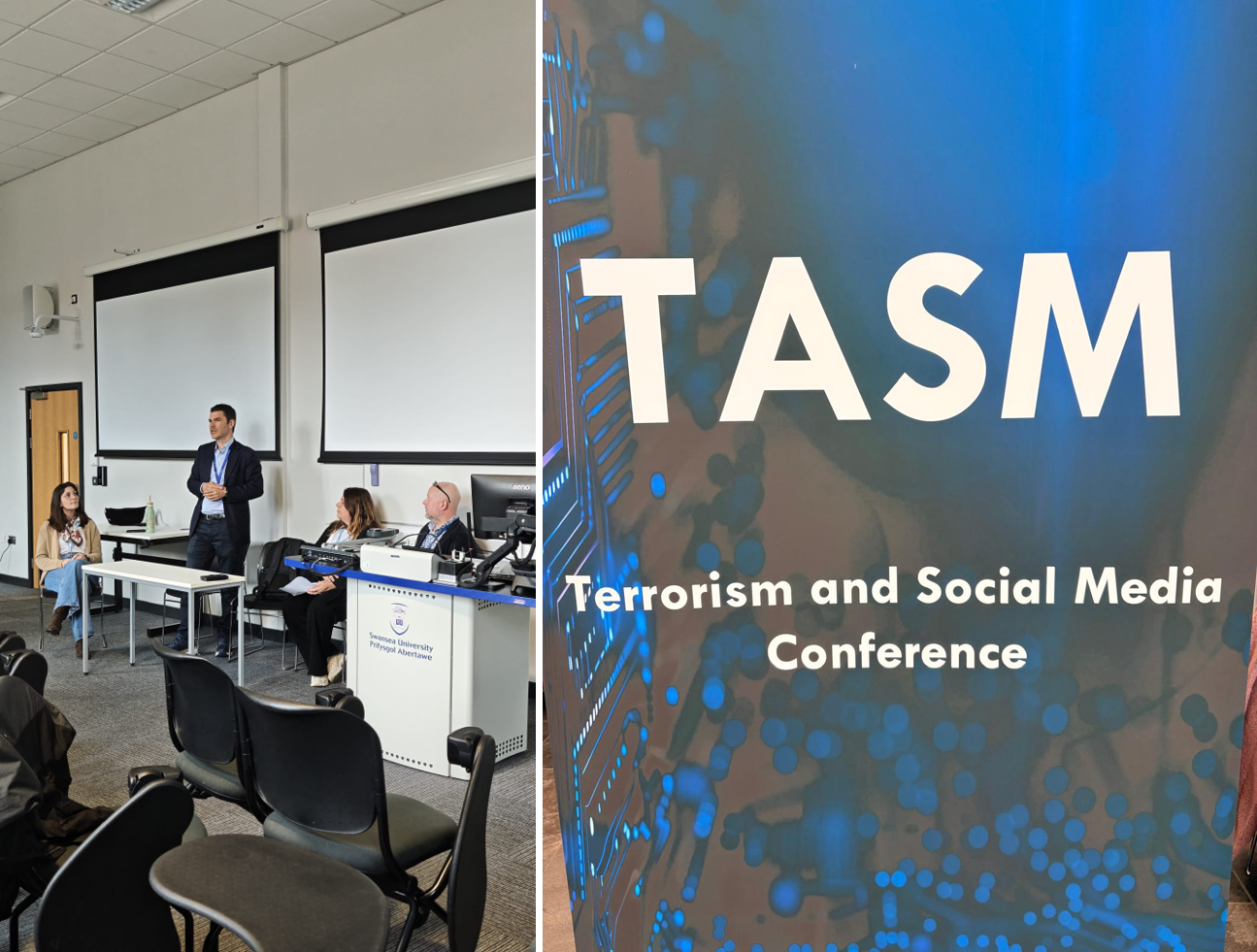
A few weeks ago, I had the opportunity to attend the Terrorism and Social Media Conference, TASM 2026, hosted by Swansea University, for a final NOTIONES dissemination event. The conference brought together researchers, practitioners, technology companies, law enforcement representatives and civil society actors to discuss how extremist and terrorist actors use different online platforms and how societies can respond effectively and ethically. From the very beginning TASM2026 highlighted that online extremism is not solely a technological issue. It is more so about people, different identities, communities, vulnerabilities, and institutions.
The event started by welcoming words of Professor Stuart Macdonald, followed by an excellent keynote from Professor Paul Gill of UCL, London. The sessions that I attended covered aspects such as TikTok data, but also on researcher safety. For example, researchers of terrorism and extremism working on OSINT may themselves face risks if their digital footprints are easily detected by research subjects. Thus, operational security is an important part of responsible research. Many papers dwelled on how extremists use social media, create visual content, and use open sources strategically. For example, terrorists have used publicly available information such as people’s mundane photos for their operations, e.g., choosing targets, and compiling operational maps and plans. Openness challenges therefore both security and democratic values.
For me, a criminologist who has worked on violent extremism, the sessions on narratives and identity were especially interesting. Extremists communicate more and more by using memes, but also by creating influencer-style content, by using a lot of humour (although not always funny) and in-group references. Therefore, their extreme ideas may appear in very familiar and everyday online formats, making prevention and detection very challenging. A strong practical focus emerged in discussions on pathways to harm, violent online communities and nihilistic violent extremism. These sessions showed the importance of identifying earlier intervention points and understanding the role of peer dynamics, recognition, thrill-seeking and online communities.
The conference also underlined the value of collaboration. For example, in the session in which we presented the NOTIONES project, we stressed how European networks can connect law enforcement, researchers, industry, and policymakers. We presented how practitioner needs evolved especially with the rise of AI and the war in Ukraine, while also highlighting the importance of long-term trust-building in the collaboration.
The main takeaway from the conference was perhaps that (online) extremism and terrorism constitute a very complex ecosystem, in which technology, culture, identity, regulation, policing, prevention, and ethics are all intertwined. Countering it requires good data, safe research practices, strong collaboration, and practices that respect fundamental rights.


Author: Tuomas Tammilehto, Laurea University of Applied Sciences