




24 Aug Second interview with SAHER
The NOTIONES final conference – Collaboration to tackle terrorism on social media
NOTIONES recently held its final event at the Terrorism and Social Media conference in the UK. What was the purpose of the event?
The final conference of NOTIONES formed an integral part of the 3-day bi-annual Terrorism and Social Media 2026 (TASM 2026) conference hosted by the Cyber Threats Research Centre (CYTREC) of Swansea University. The conference was located at the main university campus in Swansea, Wales, in the UK on 16th-18th June 2026.
This final event for NOTIONES was delivered as part of the series of annual conferences designed to support the development of a European community of professionals dedicated to addressing long-standing intelligence challenges.
The original plan of the NOTIONES programme of events was to deliver five conferences, one for each year of the project duration. As the project entered its final year of delivery, we sought to amplify dissemination efforts by exploring the possibility of hosting a sixth and final conference at TASM 2026 given the scale of the conference and its theme of tackling terrorism on social media. The primary purpose of the final conference was to share knowledge and expertise gained throughout the project, and to signpost delegates to the papers and reports the project has produced not just about terrorism and social media but all manner of pressing security concerns.
Why was the NOTIONES final conference co-located with the Terrorism and Social media conference?
We at SAHER (Europe) first proposed to co-locate the final NOTIONES conference within TASM 2026 because we had already contributed to the TASM 2022 conference, introducing NOTIONES as part of a panel discussion breakout session which showcased collaboration across disciplines and sectors to counter online terrorism. SAHER’s attendance at TASM 2022 promoted the work of NOTIONES in bringing together a network of partners to identify tools, technology and training to improve intelligence collection and prioritisation and we wanted to build upon this input and collaboration with TASM.
We also selected the conference because as the coordinator of the Tech Against Terrorism Europe (TATE) project funded by the Internal Security Fund we had worked with CYTREC at Swansea University as a partner in the TATE project which sought to support smaller hosting services providers (HSPs) in preventing terrorist actors from disseminating terrorist content as defined in the EU’s terrorist content online (TCO) regulation.
We were able to bring NOTIONES and TATE project’s together for mutual benefit, resulting in the delivery of a joint TATE and NOTIONES whitepaper authored by SAHER and CYTREC at Swansea University. The joint whitepaper ‘Tackling terrorist content online – Propaganda and content moderation’ was published in December 2023 which focused on the response of the tech industry to online terrorist and violent extremist content. This whitepaper was of direct interest and operational value to the multidisciplinary stakeholders operating across the counterterrorism and intelligence landscape, many of whom would be attending TASM 2026 so to co-locate the formal NOTIONES event at TASM this year seemed fitting.
What were the benefits of co-locating the conference within TASM 2026?
As one of the world’s leading conferences addressing terrorism and social media the benefits to co-locate the final event of NOTIOINES were clear. The international reach of TASM and the currency of terrorism and related social media harms presented a real opportunity for NOTIONES to share our work in this field which included the importance of collaboration and cooperation to tackle online terror threats.
The partnership between project TATE and NOTIONES, when combined with the links between SAHER (Europe) and CYTREC ensured that NOTIONES would achieve high visibility in their conference. This visibility included the NOTIONES logo being prominently displayed alongside other originations partnering TASM 2026 which included Vox-Pol, the world-leading research network on online extremism and terrorism, as well as Hedayah – a research institute countering extremism and violent extremism and the Christchurch Call Foundation (CFF), an organisation launched by New Zealand and France with leaders from governments, civil society, and industry, responding to the unprecedented horror of the terrorist attack in Christchurch in 2019.
How did you design the NOTIONES programme to support the theme of TASM 2026?
We were delighted to be invited to provide two sessions at TASM 2026. The first was a breakout session on the second day of the full day conference on 17th June and the second was a mini-conference on the morning of the third day of the conference on 18th June. It was important that we aligned the content of both sessions on the key themes of TASM but reflected the mission of NOTIONES in creating collaborative networks law enforcement and intelligence agency practitioners with academia and new technologies so the breakout session was to focus on interacting networks and collaborative clusters to counter terror threats tackling terrorism threats and the mini-conference to explore the achievements in law enforcement agency and innovator cooperation through the activities of NOTIONES.
It was important that these sessions were designed to bring together research, case studies, and technical demonstrations from across the NOTIONES network, with delegates gaining insights into how security and intelligence practitioners collaborate with academia and industry to address fast‑evolving digital threats. The focus was on demonstrating practical knowledge, emerging technologies, and the real‑world applications that help build secure, adaptive, and resilient societies.
What were the networking opportunities at the TASM conference for NOTIONES partners?
TASM offered excellent networking opportunities across the full three days. Many of the NOTIONES consortium partners attended multiple days of the conference, thereby maximising their learning and networking opportunities. With 293 registered delegates attending the conference across the 3 days, TASM welcomed global experts from across the world, bringing together researchers, policymakers, industry and civil society.
The delegates came from 30 different countries, including New Zealand, Australia, Singapore, Nepal, United Arab Emirates (UAE) , Somalia, Nigeria, Canada, United Sates (US), and Brazil. Law Enforcement Agencies (LEAs) were also in attendance from the police in 8 countries including the UK, Netherlands, Sweden, Germany, Bulgaria, Greece, Nigeria, and New Zealand, providing an excellent end-user practitioner focus for NOTIONES networking.
According to Swansea University it was the most diverse TASM yet with an excellent agenda of workshops and panels from sessions including elevating AI safety hosted by the Christchurch Call Foundation, a hands-on lab for terrorism safety in AI, delivered by OpenAI, and a workshop on how to research on TikTok delivered by representatives from TikTok. These panels and workshops delivered by stakeholder organisations provided unique learning and networking opportunities for all delegates.
What were your key takeaways from the NOTIONES final conference at TASM 2026?
The invitation to formally partner the TASM 2026 should be recognised as a key achievement. It is an event that is one of the leading conferences for terrorism and social media research in the world and it is easy to see why. There is a huge variety of expert opinions from all over the world all in one place which creates a melting pot of expertise.
There were numerous takeaways. The outstanding keynote speakers, the different regional perspectives, and the multistakeholder discussions, all of which served to enrich the sessions delivered by NOTIONES were highlights. What really stood out was the openness of the conversations in these sessions which is key aspect of the NOTIONES approach because understanding the perspectives of different stakeholders is essential to progress, and creating an environment in which these perspectives can be expressed is critical and for me, a key takeaway for all NOTIONES participants.
All NOTIONES consortium partners who delivered presentations and contributed as panel members really did a great job. It was pleasing to see such a diverse range of NOTIONES partners from 11 countries actively participating in the final event. TASM 2026 provided a fitting conclusion to the series of conferences and events held by NOTIONES over the last five years from which the consortium has learned that investing the time to build relationships of trust with stakeholders to enable open exchange and dialogue is essential to tackle all manner of security threats.
Profile:
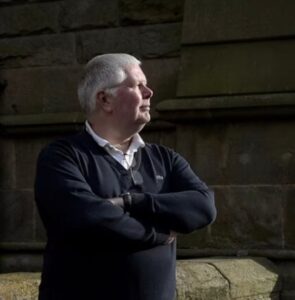
David Fortune is a Director at SAHER Europe having completed a 30-year career as an operational police officer. As a senior police officer he undertook a leading role in the strategic development and engagement of police and security innovation at a European level. As a founding director of a regional Fraud Forum to tackle fraud and ID theft by way of education, awareness and improved investigations, he gained valuable expertise as the Police Project Director of the establishment of a Business Crime Reduction Centre which protects SMEs from e-crime and other forms of crime. Working at a European level he became highly experienced in delivering and developing new DG Home, FP7 and H2020 security proposals. He is an accredited EU proposal evaluator and project reviewer on behalf of REA at the European Commission and sits by invitation as a Board Member for leading security research institutes.